

Heart Study Probes Diabetes Link, Sparks Debate Heart Study Probes Diabetes Link, Sparks Debate
February 18, 2026MRI Abnormalities Common in Pain-Free Shoulders MRI Abnormalities Common in Pain-Free Shoulders
February 18, 2026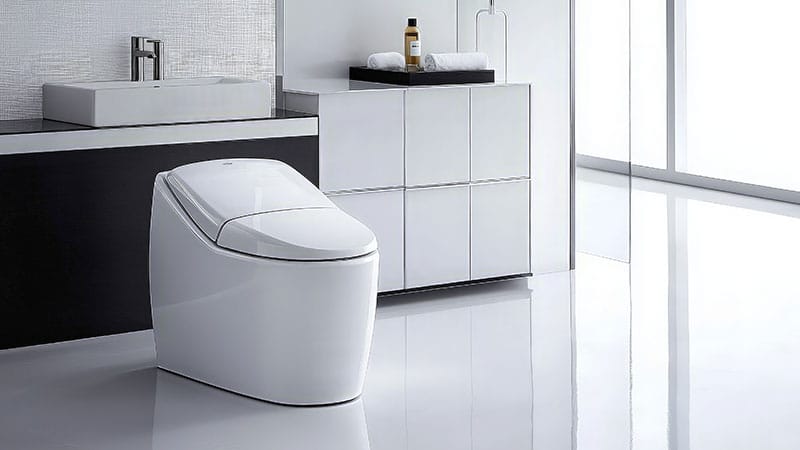
One of the hot products showcased at the recent Consumer Electronic Show (CES) was the smart toilet. In its analyst report on CES highlights, research firm Parks Associates wrote, “Smart toilets are emerging as one of the most practical yet underappreciated connected health technologies, particularly for older adults. Monitoring hydration, urinary health, and gut health can provide early indicators of serious medical issues, including infections and chronic conditions.”
Some companies, such as Kohler and Vivoo, are now selling smart toilets with varying degrees of functionality for consumers to use at home.
But Park Seung-min of Nanyang Technological University in Singapore, who started working on the technology at Stanford University in 2016 under the mentorship of the late Sanjiv Sam Gambhir, told Medscape Medical News that smart toilets with full capabilities are not yet ready for home use. He says the toilet should be regarded as a medical device for its initial deployment, rather than a commercial product, because of ethical considerations and challenges — particularly, privacy — in the use of the data it provides.
With that in mind, Park’s recently formed company, Kanaria Health, installed 12 units in a South Korean hospital. The research team is collecting data with a view toward validating the toilet’s use in the clinic and the potential impact of privacy safeguards.
Interestingly, an archetype of the product was featured in a 2005 movie called The Island, Park said. Actor Ewan McGregor, playing Lincoln Six Echo and Tom Lincoln, uses the toilet upon waking and receives a urine analysis that tells him if he needs to control his sodium intake or other nutritional aspects.
“That was the archetype, and we developed the prototype,” said Park, who received an Ig Nobel Prize for Public Health — a satirical prize that rewards unusual or quirky research — for his work on the smart toilet.
Monitoring Defecation in Real Time
Bioengineering the smart toilet is complex and ongoing. Simply put, the most recent documented prototype, described in Advanced Science, has a module attached to the toilet seat. The module contains an optical sensor, a pressure sensor, a light-emitting diode (LED) strip, and a single-board computer — all connected via a printed circuit board. This enables real-time monitoring of defecation conditions and behaviors.
The optical sensor supports the assessment of stool thickness. Two filters, “stool dropping” and “stool dropped,” track the stool while it is being passed and after it has fallen into the toilet; by computing the time difference between these detections, the stool dropping duration can be determined, and both the first and last stool events can be pinpointed.
A convolutional neural network classifies the stool into seven Bristol Stool Form Scale (BSFS) categories: BSFS1 and BSFS2 for constipation, BSFS3 to BSFS5 for normal stool, and BSFS6 and BSFS7 for diarrhea.
By integrating temporal data from the optical and pressure sensors, the system enabled monitoring of the entire defecation process. When a participant sat on the smart toilet seat, the pressure sensor detected their presence, and the LED strip was activated, providing sufficient illumination for the optical sensor to analyze the stool.
The time at which the participant sat down was recorded, and the toilet’s state was classified as clean, urine, stool, or toilet paper, enabling further analysis of the sequence of events, such as whether urination occurred before or after defecation.
The prototype was tested by analyzing 45 defecation events from 11 participants (five women and six men; age, 19-41 years). The researchers found that stool dropping duration followed a log-normal distribution, with longer durations (> 5 seconds) linked to lower BSFS scores, suggesting constipation. Stool thickness decreased with increasing BSFS score, validating its role as an objective marker for bowel function.
The team also coined a new term, “eu-tenesmus.” Tenesmus is the persistent feeling of needing to defecate or urinate; eu-tenesmus was defined as the interval between the last stool drop and cleansing, averaging 74.8 seconds. Eu-tenesmus showed significant gender differences in the study but no correlation with stool consistency, which the authors said suggests its potential as an independent biomarker for gut health.
One immediate clinical application of the smart toilet was for irritable bowel syndrome, said Park. The conventional diagnostic depends solely on the patient’s use of a stool diary over 2-3 weeks and patients’ ability to classify their stool by using a BSFS card, he explained. His smart toilet, as well as Kohler’s and Vivoo’s, uses artificial intelligence to classify the stool, so the process is automated.
Challenges Abound
Passive data collection of excreta and the use of biochemical assays to detect metabolites pose ethical and legal challenges, Park acknowledged. “The first is a psychological barrier to using the toilet as a diagnostic center because we want to think about use of the toilet is private, and we want to hold on to that privacy.”
The second challenge is a social taboo. “We never actually talk about the defecation or urination in public. We never actually greet each other by saying ‘Oh, how’s your stool today? How’s your urination today?’” he said.
“There’s also an engineering challenge,” he noted, “but that part is resolvable for now.”
In a recent article in Nature Reviews Bioengineering, Park provided examples of the ethical/legal challenges of passive data collection. “For example, a smart toilet may identify pregnancy or detect illicit substances. Such information might carry personal or legal consequences. In addition, in shared households, such data could be gathered from individuals who have not consented to data collection. Therefore, the boundary between a medical device and consumer electronics might be blurred, leaving consent ambiguous and accountability diffuse. Even if anonymized, excretory data are inherently identifying, linking the biological to the behavioral.”
Despite the challenges, Park is forging ahead. In addition to expanding the capabilities of stool analysis and making the smart toilet more user friendly, his team has developed smart toilet paper to facilitate stool collection in the clinic. “When clinicians collect a stool sample, they have to make a smear of the stool with toilet paper. So I thought, Why not use toilet paper as a substrate to detect if something is going on?” he said. “We recently did that, and it worked really well. The concern is we have to modify the toilet paper with a chemical that’s both safe to use and consumer friendly. We’re actually working on that stage right now.”
‘Strong Potential’
Alicia H. Muratore, MD, a gastroenterologist at UNC REX Digestive Healthcare in Raleigh, North Carolina, sees the promise of the smart toilet for diagnostic and longitudinal monitoring of bowel function, “but it remains early in its clinical maturation,” she told Medscape Medical News.
“Metrics such as stool dropping duration and thickness seem to correlate reasonably well with established clinical tools like the BSFS, and automated monitoring could meaningfully reduce patient burden while improving adherence and longitudinal data quality,” she said. “Prior feasibility studies suggest these systems can reliably track bowel habits over time and may be particularly useful for functional bowel disorders or motility research.”
That said, she noted, “Novel parameters such as the proposed ‘eu-tenesmus’ interval are intriguing but remain unvalidated as independent clinical biomarkers, especially given their lack of correlation with stool consistency and unclear relationship to patient-reported symptoms or established physiologic testing.”
Like Park, she added, “Issues of privacy, user acceptance, and ethical management of biometric data will be critical to address, particularly if the technology moves beyond institutional settings.”
Furthermore, she concluded, “Algorithmic bias and health equity should be addressed through diverse datasets and ongoing validation. With thoughtful integration into clinical workflows, interoperability, and staff and patient engagement, these technologies could provide valuable, continuous insights.”
Park is the co-founder of Kanaria Health that is developing the smart toilet. Muratore declared no relevant conflicts.
Marilynn Larkin, MA, is an award-winning medical writer and editor whose work has appeared in numerous publications, including Medscape Medical News and its sister publication MDedge, The Lancet (where she was a contributing editor), and Reuters Health.
